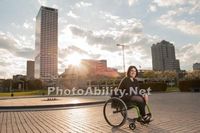
Why use a travel agent?
Tripology offers an exhaustive answer in 101 Reasons to Use A Travel Agent the first five reasons listed being:
1. Convenient One-Stop Shopping
2. Consumer Advocate
3. Expert Guidance
4. Save Time
5. Choice
Source: http://www.tripology.com/101-reasons-to-use-a-travel-agent-a/
In Forbes Larry Olmsted suggests in Why You Need A Travel Agent, Part 1:
.the bottom line is that they know
more than you do, they are better connected than you, they have access to
benefits you can't get otherwise, they can often beat any other prices
available (even online, yes), and after you have planned everything, they
provide a safety net during your trip that you simply won't get by booking
yourself or buying insurance.
Source: http://www.forbes.com/sites/larryolmsted/2012/01/20/why-you-need-a-travel-agent-part-1/
I want to propose a different approach. It borrows an idea
from the GLBT community as interpreted by the sociologist, Erving Gofman.
Gofman wrote on the concept of stigmatization. A stigma is a way of marking
an individual or

group with an wanted set of characteristics that serves to
isolate that group from opportunity and establish barriers to their full
participation in society. Gofman assigned individuals to one of two categories
- the stigmatized and normals. He then identified a subset within the normals:
- the stigmatized are those who
bear the stigma;
- the normals are those who do
not bear the stigma; and
- the wise are those among the
normals who are accepted by the stigmatized as "wise" to their
condition (borrowing the term from the homosexual community).
Source: http://en.wikipedia.org/wiki/Social_stigma
The
entry on Social Stigma at Wikipedia goes on the elaborate:
The wise normals are not merely those who are in
some sense accepting of the stigma; they are, rather, "those whose special
situation has made them intimately privy to the secret life of the stigmatized
individual and sympathetic with it, and who find themselves accorded a measure
of acceptance, a measure of courtesy membership in the clan." That is,
they are accepted by the stigmatized as "honorary members" of
the stigmatized group. "Wise persons are the marginal men before whom the
individual with a fault need feel no shame nor exert self-control, knowing that
in spite of his failing he will be seen as an ordinary other." Goffman
notes that the wise may in certain social situations also bear the stigma with
respect to other normals: that is, they may also be stigmatized for being wise.
Source: http://en.wikipedia.org/wiki/Social_stigma
While it is true that the wise may share in the stigma they
are also much more likely to be immune to it when working as an expert and
advocate on the behalf of travelers with

disabilities - one of the three groups
universally considered to be stigmatized.
Operating like a "secret shopper" a travel agent can help
limit the challenges that one tackles while traveling to those one chooses for
the thrill or personal fulfillment involved instead of making the very act of
travel planning an exhausting endurance test.
On a more personal level the relationship one allows a wise
travel agent to have with you can facilitate the unique needs of some travelers
with disabilities. These can sometimes include sensitive information such as
medical, stamina, personal care, communication, or assistive equipment needs.
Unknown to some travelers, travel agents are trained to
ensure a high quality of satisfaction for their clients through the practice of
qualification interviews when a customer first contacts them. Companies such as
RoadID have developed innovative combinations of stylish medical alert
accessories that provide access to medical and emergency contact data for first
responders and can be a part of that process. Agencies such as Italy's
Carlo Besta National Neurological Institute are engaged in ongoing research on
how best to improve collection and communication of the needs of travelers with
disabilities to travel professionals.
It is also the case that a travel agent may become
passionately engaged as an ally for travelers with disabilities. In fact, that
is rather likely. Numerous studies show that the one significant predictor of
significant attitude change toward persons with disabilities is personal
contact with them.
In that case, it is helpful for a traveler with a disability
too be not only an articulate self-advocate but what amounts to a mentor in the
travel agent's professional development.
I suggest some attitudes for self-advocatcy in the New
Mobility article reprinted below, Disability Pride and World Travel as well as in the piece, Accessibility is Not Inclusion.

The second element, becoming a living resource for the
professional development of your travel agent requires all the skill and dedication
of a consultant, teacher, and friend. A
good foundation would be to orient the travel agent to the various Models of
Disability as explained by Deborah Kaplan in Definition of Disability
Also helpful is familiarity with the concept of stigma and
thinking about how to combat it.
Bruce Link and Jo Phelan[12]
propose that stigma exists when four specific components converge:
1.
Individuals differentiate and label human
variations.
2.
Prevailing cultural beliefs tie those labeled to
adverse attributes.
3.
Labeled individuals are placed in distinguished groups
that serve to establish a sense of disconnection between "us" and
"them".
4.
Labeled individuals experience "status loss and discrimination"
that leads to unequal circumstances.
In this model stigmatization is also contingent on
"access to social, economic,
and political power that allows the identification of
differences, construction of stereotypes, the separation of labeled persons into
distinct groups, and the full execution of disapproval, rejection,
exclusion, and discrimination." Subsequently, in this model the
term stigma is applied when labeling, stereotyping, disconnection, status loss,
and discrimination all exist within a power situation that facilitates stigma
to occur...
Stigma,
though powerful and enduring, is not inevitable, and can be challenged. There

are two important aspects to challenging stigma: challenging the stigmatisation
on the part of stigmatizers, and challenging the internalized stigma of the
stigmatized. To challenge stigmatization, Campbell et al.[16] summarise
three main approaches.
1.
There are efforts to
educate individuals about the non-stigmatising facts and why they should not
stigmatise.
2.
There are efforts to
legislate against discrimination.
3.
There are efforts to
mobilize the participation of community members
in anti-stigma efforts, to maximize the likelihood that the anti-stigma
messages have relevance and effectiveness, according to local contexts.
In the
end, the very act of you getting out to travel is educational for the industry.
How much more valuable as you are able to recruit allies and identify the wise
among travel professionals along the way.
Recent Comments